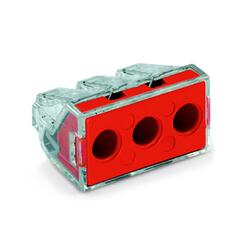
The world of electrical installations is constantly evolving, with new technologies and products promising enhanced efficiency and safety. Among the most discussed innovations are Wago Lever-Nuts, particularly the newer #10 AWG Wago connectors. These compact, spring-lever connectors have revolutionized low-voltage wiring, but their suitability for high-load applications, especially in demanding photovoltaic (PV) circuits, remains a hot topic among electricians and solar professionals. The question isn't just about convenience; it's fundamentally about safety and long-term reliability in environments where power generation is consistent and significant.
For those managing complex home energy systems, including integrating solar with wago smarthome ecosystems, understanding the integrity of every connection is paramount. A robust electrical backbone ensures not only performance but also safety. This article dives deep into the performance and safety considerations of #10 AWG Wago Lever-Nuts when used in high-load PV circuits, offering insights from expert discussions and practical analysis.
The Advent of #10 AWG Wago Lever-Nuts for PV Systems
For years, electricians working on solar installations grappled with the limitations of existing connectors. Most PV wiring, particularly for arrays, typically uses #10 AWG wire due to its balance of current capacity and flexibility. The manual, often tedious, process of twisting wire nuts in tight junction boxes, especially on hot roofs, has been a long-standing challenge. When Wago introduced their #10 AWG Lever-Nuts (specifically the 221 series), it was immediately hailed as a potential "game changer."
The promise was significant: quicker, easier, and potentially more consistent connections compared to traditional wire nuts. The simple lever mechanism promised a secure connection without the guesswork of proper wire nut torque. This ease of installation is particularly appealing in solar projects, where speed and efficiency can impact project timelines and costs. However, the enthusiasm was tempered with caution, especially when considering the unique stresses of PV systems.
Initial Hesitations and Application Nuances
- High-Load Applications: While perfect for lighting circuits, many professionals express natural hesitation about using them in circuits with continuous high ampacity, such as water heaters, dryers, or, critically, PV systems.
- Thick Insulation: A frequently cited concern is the thick insulation often found on #10 AWG PV wire. This robust insulation, designed for outdoor environments and high temperatures, can sometimes make it difficult for the wire to properly seat into the connector throat of early Wago 221 models. While Wago has made strides, this remains a point of verification during installation.
- Outdoor Environment: PV junction boxes on roofs are exposed to extreme temperatures, UV radiation, and potential moisture. Any connector used in these environments must withstand these conditions without degradation.
Performance Benchmarks: Wago Lever-Nuts vs. Wire Nuts
The core of the debate often boils down to performance, particularly electrical resistance and heat generation. Electrical professionals frequently refer to I²R losses (current squared times resistance), which directly translate to heat generated at the connection point. Higher I²R losses mean more heat, which can lead to premature insulation degradation, increased resistance, and even fire hazards over time.
Comparing I²R Losses and Heat Rise
Numerous independent tests and comparison videos have scrutinized the electrical characteristics of Wago Lever-Nuts against properly installed wire nuts. The consensus reveals a nuanced picture:
- Wire Nuts (Properly Twisted): When installed correctly, with wires pre-twisted and the nut torqued to specifications, wire nuts often exhibit slightly lower I²R losses and consequently less heat rise. This "bulletproof" connection is a benchmark for reliability.
- Brand-Name Wago Lever-Nuts: Genuine Wago connectors, such as the 221 series, perform exceptionally well. Their I²R losses are generally on par with, or only marginally higher than, a perfectly installed wire nut. Crucially, this difference is often only discernible when pushing very high currents (e.g., 50 amps through 14AWG), a scenario less common in typical #10 AWG PV circuits which might operate at lower currents but for longer durations.
- Knock-offs: A critical distinction must be made between genuine Wago products and generic knock-offs. Unbranded or counterfeit lever-style connectors often lack the material quality, precise engineering, and rigorous testing of Wago, leading to significantly higher resistance, poor contact, and serious safety risks. Always use brand-name, certified connectors.
In practical terms, for many standard applications, the performance difference between a quality Wago Lever-Nut and a well-installed wire nut is often negligible. However, PV circuits present unique challenges that magnify even small differences.
Specific Challenges in Photovoltaic (PV) Applications
PV circuits are not "standard" electrical installations. They operate under a distinct set of conditions that demand the highest level of reliability from every component.
For a deeper dive into how these two connector types stack up, check out: Wago #10 AWG vs. Wire Nuts: The Best Choice for PV Systems.
Hot Environments and Sustained High Ampacity
Solar panels and their associated junction boxes are typically installed on roofs, where ambient temperatures can soar, especially under direct sunlight. These hot environments contribute to increased conductor resistance and stress on insulation. Unlike a household appliance that cycles on and off, a PV circuit connected to an inverter will often carry its maximum current for many hours a day. This sustained high ampacity in a hot environment requires connectors that can dissipate heat efficiently and maintain their integrity over decades.
- Thermal Cycling: The constant heating and cooling cycles (day/night, sunny/cloudy) can cause expansion and contraction in the connection materials. Connectors must be designed to withstand this without loosening or increasing resistance.
- Long-Term Reliability: PV systems are designed for a lifespan of 20-30 years. Any component, especially one as critical as a wire connector, must be engineered for this extended operational period without degradation.
The "Bulletproof" Hardware Mentality
Given these demanding conditions, many experienced solar installers advocate for the "most bulletproof hardware you can find." This often translates to using screw terminal connectors rated for high ampacity (e.g., up to 60A or more) that provide a robust, positive connection that can be visually verified and easily tightened if needed. While Wago Lever-Nuts offer convenience, some professionals argue that the peace of mind offered by heavily-rated screw terminals in critical PV connections outweighs the installation speed benefit of levers.
The concern isn't that Wagos are inherently unsafe, but rather that in the absolute harshest, highest-stress environments, marginal differences in resistance or long-term resilience could accumulate into significant issues over a system's multi-decade lifespan.
Practical Considerations and Expert Recommendations
When deciding whether to use #10 AWG Wago Lever-Nuts in PV circuits, consider the following:
- Application-Specific Use: Wago Lever-Nuts are undoubtedly excellent for less-loaded circuits, such as lighting or accessory circuits within a smart home setup where #10 AWG might be used for longer runs. Their ease of use and consistent connection quality make them a superior choice to poorly installed wire nuts.
- High-Load Caution: For circuits known to carry sustained high loads (like water heaters, dryers, or the primary DC runs from a PV array to an inverter), exercise greater caution. This is where the marginal increase in I²R losses or the long-term integrity in extreme heat becomes a more significant factor.
- Quality Over Convenience: Always prioritize quality. Invest in genuine Wago products from reputable suppliers. The cost saving of a cheap knock-off is never worth the potential safety hazard.
- Installation Consistency: One of Wago's greatest strengths is consistency. A properly installed Wago connection is reliably good. A wire nut, however, is only as good as the electrician installing it, and unfortunately, many "hacks" don't bother with proper pre-twisting or torque, leading to substandard connections.
- Verify Fit: If using #10 AWG Wago connectors with PV wire, always verify that the thicker insulation allows for a full and secure insertion into the connector throat.
Ultimately, the safety and suitability of #10 AWG Wago Lever-Nuts for high-load PV circuits depend on a nuanced understanding of their performance characteristics, the specific demands of the PV environment, and the installer's commitment to quality. While they are a fantastic product for many applications, the continuous, high-current, high-temperature environment of a solar array demands a critical assessment and, for many, the preference for connectors with an undisputed track record of extreme resilience.
For critical PV connections, especially where high currents are continuous and temperatures are extreme, many professionals still lean towards robust screw terminal connectors designed for such demanding conditions. However, for less critical connections within the PV system or for integrating reliable power into a sophisticated wago smarthome setup, #10 AWG Wago Lever-Nuts offer a compelling, efficient, and safe solution when genuine and properly applied.